What Can You Lay Rubber Gym Tiles On?
Quick answer
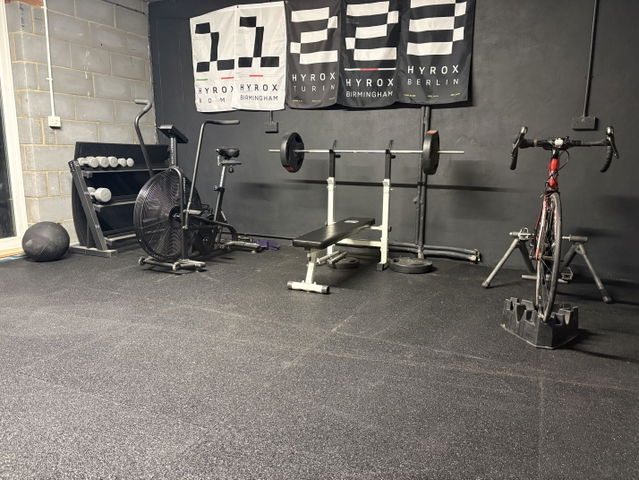
Rubber gym tiles are made to be laid loose, indoors, on a clean, dry, level and firm floor. Concrete and screed are the ideal base, firm floorboards and finished floors work with a few checks, over underfloor heating you should check with your heating installer first, and we don't recommend laying them outside.

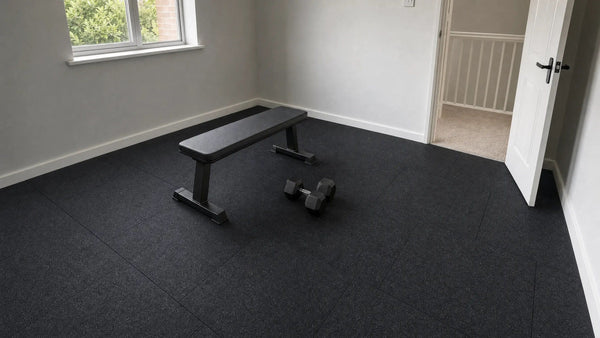
Our 1 m × 1 m rubber gym tiles are made to be laid loose, indoors, on a clean, dry, level and firm floor. Concrete and screed are the ideal base and need no underlay. Firm floorboards, laminate, LVT and tiled floors work too, with a couple of checks. Over underfloor heating, check with your heating designer or installer first. Carpet makes the tiles less stable, and we don't recommend laying them outside.
The floor underneath matters because the tiles rely on it. Each tile weighs about 9.5kg (10mm) to 34kg (40mm), and that weight is what keeps a wall-to-wall floor in place without glue. We sell these tiles, so everything below is about our tiles specifically, including the places we'd steer you away from.
Which floors can you lay rubber gym tiles on?
Any firm, flat, dry floor indoors is a suitable base, with one extra check over underfloor heating. The table gives the short answer for each floor customers ask us about. The sections below explain each one, including what to check first and where we don't hold a figure.
| Floor | Short answer | Check first |
|---|---|---|
| Concrete or screed, including garage slabs | The ideal base | Dry, level and swept. No underlay needed |
| Wooden floorboards | Suitable if firm and flat | Loose or springy boards, raised nail heads, total weight if upstairs |
| Laminate, LVT, vinyl, ceramic or stone tiles | Suitable on a firm, flat floor | Marking can't be ruled out on every finish, so test a sample. Finish any open edges |
| Carpet | A soft base, so the tiles are less stable | The tiles can move or rock, and the carpet can be flattened, marked or damaged |
| Underfloor heating | Ask your heating designer or installer first | Rubber insulates. We hold no R-value or tog figures |
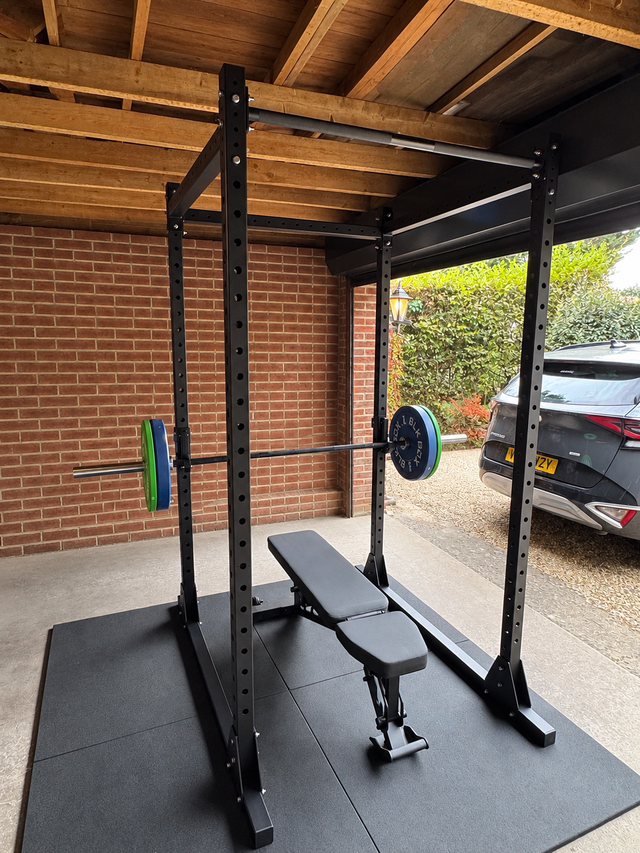
| Garage, shed or garden room | Fine with a dry, level floor | Garage door clearance, water coming in under the door |
| Upstairs room | The tiles are fine. The question is the floor | The flooring adds about 9.5–34kg per m² before any equipment. We hold no noise figures |
| Outdoors: garden, grass, patio, decking | Not recommended | Water resistant, not waterproof. Outdoor use isn't covered by the warranty |
If you're unsure how the rubber will sit on your floor, order a sample first. Samples are 10cm × 10cm squares in any thickness, in black or white fleck, free apart from postage.
Products in this guide
-

Rubber Gym Flooring Mats (1m x 1m)
£17.99
£14.99 ex. VATSale priceFrom £17.99
Regular price
£14.99 ex. VAT£32.00
£26.67 ex. VATUnit price -

White Fleck Rubber Gym Flooring Mats (1m x 1m)
£18.99
£15.83 ex. VATSale priceFrom £18.99
Regular price
£15.83 ex. VAT£32.00
£26.67 ex. VATUnit price -

Sample - Rubber Gym Flooring
£0.00
£0.00 ex. VATSale price£0.00
Regular price
£0.00 ex. VAT
£0.00 ex. VATUnit price -
Rubber Gym Flooring Edge Ramps
£9.99
£8.33 ex. VATSale priceFrom £9.99
Regular price
£8.33 ex. VAT
£0.00 ex. VATUnit price


Can you lay rubber gym tiles straight onto concrete?
Yes. A clean, dry, level concrete slab or screed is the ideal base. You don't need underlay over concrete, and laid wall to wall the tiles are heavy enough to stay in place without adhesive. Before you lay, check these four things.
- Sweep away grit and fill deep holes. A level base helps the tiles sit closely together. Grit or a hollow under a tile stops it sitting flat.
- Make sure the floor is dry. If a slab is damp, find and deal with the cause before you lay. That includes rain getting in under a garage door. Once the floor is down, lift a tile now and then to check the concrete underneath.
- New concrete or screed. We don't publish a moisture limit for newly laid concrete or screed. If yours is new, contact us before you order.
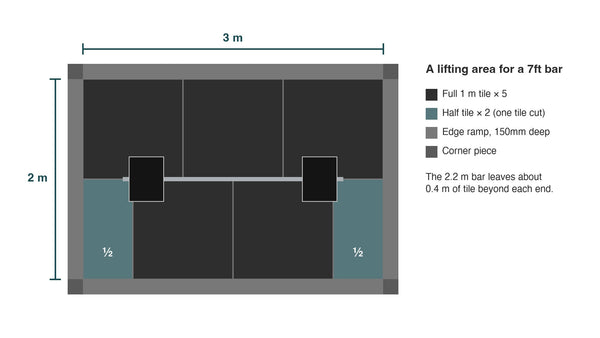
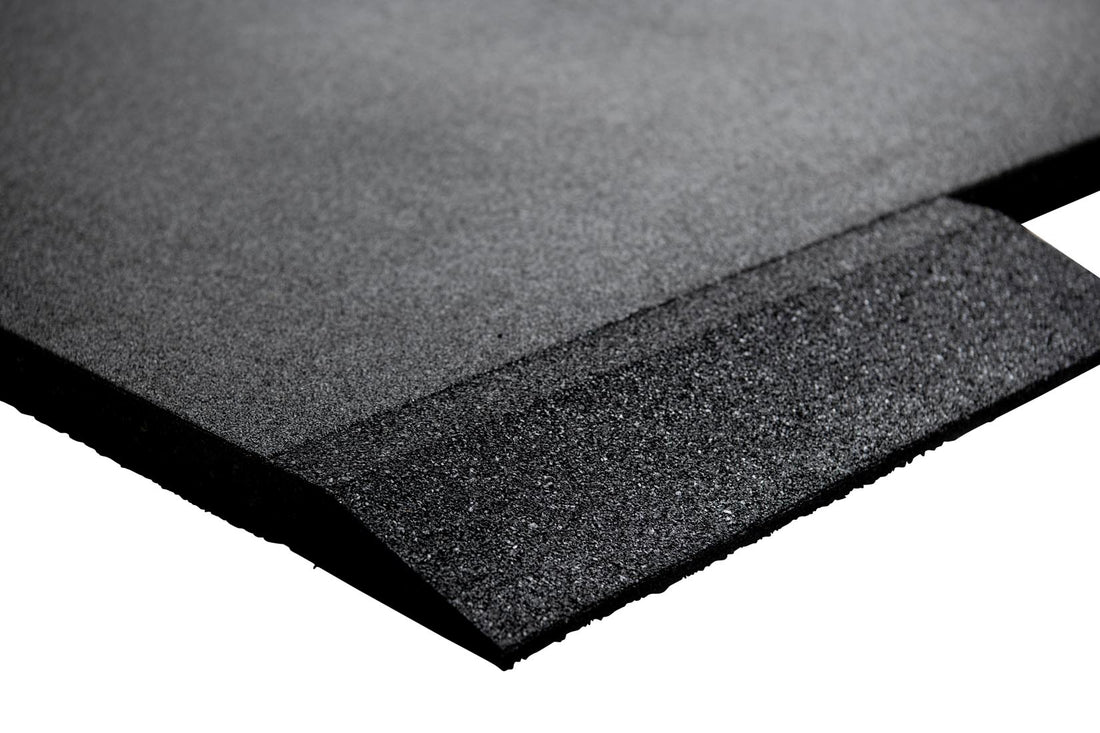
- Open edges. If the floor stops short of a wall, finish the open sides with edge ramps or a suitable adhesive. The laying guide covers this step by step.
Which thickness you need depends mostly on how you train, though the subfloor, drop height and how often weights are dropped matter too. See how thick gym flooring should be.
Can you put rubber gym tiles on wooden floorboards?
Yes, if the boards are firm and flat. The tiles can go on any firm, flat floor, and a level base helps them sit closely together. Before you lay, fix loose or squeaky boards, knock in raised nail heads and sweep the floor. In an upstairs room, think about the total weight on the floor as well (see below).
Two things to know:
- The tiles follow the floor. They lie loose, so a dip, a hump or a warped board shows up as a tile that rocks or a joint that won't close. Fix those first.
- Finished wood can mark. We haven't tested our tiles against every floor finish, so we can't promise a varnished, oiled or painted floor won't mark. The sample test below works on wood too.
Will rubber tiles mark laminate, LVT or vinyl?
They might. Rubber can react with some vinyl and LVT finishes over time, and heavy equipment can leave pressure marks in softer floors. We haven't tested our tiles against every floor finish, so we can't guarantee there will be no marking. The tiles themselves lie fine on any firm, flat finished floor, including laminate and ceramic or stone tiles.

Test it first. Leave a sample on the floor for a few weeks, the same way up as a tile would lie and somewhere out of the way, then lift it and look. This checks how the rubber reacts with your floor's finish. It can't show the pressure marks that heavy equipment might leave.
Keeping the tiles in place. On a smooth floor the tiles are held by their own weight and the pressure of the tiles around them, so a wall-to-wall floor stays put. If the floor stops short of a wall, finish the open edges with edge ramps, which are made for 15, 20, 30 and 40mm tiles (there is no 10mm ramp). Adhesive bonds to whatever is underneath, so think twice before gluing anything to a floor you want to keep.
Can you put rubber gym tiles over carpet?
Carpet changes how the tiles behave. It's soft, so the tiles are less stable and can move or rock underfoot, especially heavier tiles under a rack or during a lift. The tiles and the equipment on them can also flatten, mark or damage the carpet, and it may not recover when you lift them.
The tiles are designed to rely on a firm base: their weight and the pressure of the tiles around them hold the floor together. If the carpet can come up, the screed or floorboards beneath give them that base (see concrete and floorboards above).
If the carpet has to stay, contact us before you order, with the room size, the type of carpet and what you'll be doing on the floor.
Can you lay rubber gym flooring over underfloor heating?
Check with your heating designer or installer before you order. Rubber is an insulator, so the tiles will reduce the heat reaching the room. We don't hold tested thermal resistance (R-value or tog) figures for our tiles, so we can't tell you by how much, or whether your system will still heat the room as it should.
Give your installer:
- the material: recycled SBR rubber, polyurethane bonded;
- the thickness you're considering (10, 15, 20, 30 or 40mm);
- how much of the heated floor the tiles will cover, and that they are laid loose.
Ask whether the system has a maximum thermal resistance for floor coverings. If it does, your installer is the person to judge the tiles against it.
Can you use rubber gym tiles outside, on grass or a patio?
We don't recommend it. Our tiles are made for indoor use. They are water resistant, not waterproof, and sun and standing water shorten their life. Outdoor use isn't covered by the warranty. That applies on grass, a patio, decking or a garden play area alike.
- Covered but open spaces such as a gazebo, a carport or an open-fronted shelter: if rain, standing water or direct sun can reach the floor, treat it as outdoors.
- Our range: we don't sell a tile made for outdoor use, and our sled track turf isn't weatherproof either.
- Indoors in the garden is different. A garage, shed or garden room with a dry, level floor is fine (next section).
Can you use them in a garage, shed or garden room?
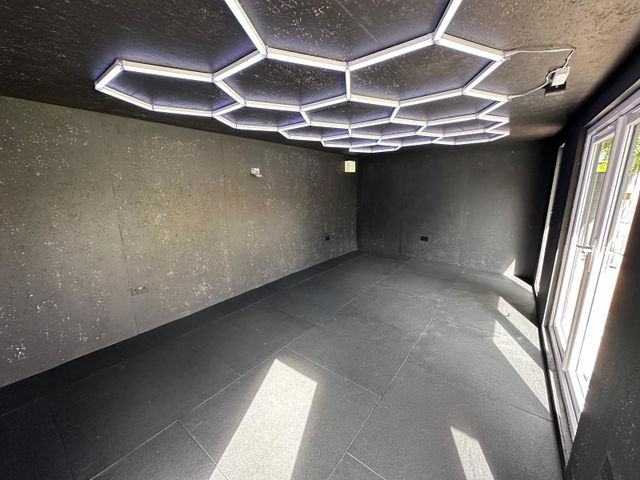
Yes. Garages, sheds and garden rooms with a dry, level floor are fine. What makes them suitable, unlike the open garden, is the roof and walls: rain and standing water can't reach the floor.

- Garage doors. Check the clearance under the door against the thickness you choose. A common approach is to stop the floor just inside the door and finish the edge with ramps, so the door closes onto the concrete as before.
- Water under the door. Deal with any water that gets in under the door before you lay, and lift a tile occasionally to check the floor beneath.
- Timber shed and garden room floors are floorboards: they need to be firm and flat, as above.
The garage gym flooring guide covers garages in more detail.
Can you put a rubber gym floor in an upstairs room?
The tiles are fine on a firm, flat upstairs floor. What we can't tell you is how much weight your floor will carry or how much sound will reach the room below. The flooring adds real weight before any equipment goes on it. If you're planning heavy equipment upstairs, ask a structural engineer or builder about the floor first.
Each tile covers 1 m², so the weight on the floor is simply the room's area times the tile weight, whatever cuts you make. For a 3 m × 3 m spare room (9 m²):
| Thickness | Weight per tile (per m²) | Flooring weight in a 3 m × 3 m room |
|---|---|---|
| 10mm | About 9.5kg | About 86kg |
| 15mm | About 13.5kg | About 122kg |
| 20mm | About 17.5kg | About 158kg |
| 30mm | About 26kg | About 234kg |
| 40mm | About 34kg | About 306kg |
- Noise. We don't hold acoustic or impact-sound test figures for any thickness, so we don't promise how much quieter the room below will be.
- Dropping weights. Our drop guide figures are guide figures. The subfloor, the drop height and how often weights are dropped all matter, and a timber floor upstairs is a very different base from a concrete slab. The thickness guide explains the figures.
- Getting the tiles upstairs. Every tile is a 1 m square, from about 9.5kg at 10mm to about 34kg at 40mm. Measure your staircase turns and landings before you order.
Do you need underlay or adhesive?
Usually neither. Laid wall to wall on a clean, dry, level floor, the tiles are heavy enough to stay in place, and no underlay is needed over concrete. Where an edge is left open, secure it with edge ramps or a suitable adhesive.
- 20, 30 and 40mm tiles take connectors, which hold the tiles in line so the joints stay tight.
- 10 and 15mm tiles don't take connectors, so adhesive is the way to add restraint on an open edge.
The full range of connectors, edge ramps and adhesive is in one place. For laying, cutting and finishing, see the laying guide. To keep the floor in good condition once it's down, see how to clean rubber gym flooring. For choosing tiles in the first place, start with our rubber gym flooring buying guide or browse our rubber gym flooring tiles.
About this guide
This guide is based on the specifications and fitting guidance on our rubber gym flooring product pages and in our help centre, and on the questions customers sent us between February and October 2026 about laying tiles on concrete, floorboards, laminate, carpet, underfloor heating, upstairs and outdoors. We sell the tiles and accessories it links to. Where we don't hold a figure, such as thermal resistance, sound reduction or how much weight a floor can take, the guide says so rather than guessing. The room weights are worked out from the published weight per tile.
Last reviewed: 9 October 2026.