

Cheap Gym Flooring Mats
Outfit your training space without breaking the bank with our range of cheap gym flooring mats. Designed for excellent value, our budget-friendly rubber mats deliver the durability, safety and protection you need for any home gym, garage gym or light commercial setup.
Discover affordable gym flooring that doesn't compromise on performance — reliable shock absorption to protect your subfloor and equipment, plus a stable, anti-slip surface for safer lifting.
Choose from 1x1m cheap gym flooring tiles in 10mm, 15mm, 20mm, 30mm and 40mm thicknesses. Robust gym floor protection at an unbeatable price, shipped with fast UK delivery from Equipped Gym.

Rubber Gym Flooring Mats (1m x 1m)
£17.99
£14.99 ex. VAT
From £17.99
£14.99 ex. VAT
£32.00
£26.67 ex. VAT

10mm Rubber Gym Flooring Mats (1m x 1m)
£17.99
£14.99 ex. VAT
£17.99
£14.99 ex. VAT
£32.00
£26.67 ex. VAT

15mm Rubber Gym Flooring Mats (1m x 1m)
£20.99
£17.49 ex. VAT
£20.99
£17.49 ex. VAT
£33.00
£27.50 ex. VAT
20mm Rubber Gym Flooring Mats (1m x 1m)
£23.99
£19.99 ex. VAT
£23.99
£19.99 ex. VAT
£34.50
£28.75 ex. VAT

30mm Rubber Gym Flooring Mats (1m x 1m)
£33.99
£28.33 ex. VAT
£33.99
£28.33 ex. VAT
£48.00
£40.00 ex. VAT

40mm Rubber Gym Flooring Mats (1m x 1m)
£44.99
£37.49 ex. VAT
£44.99
£37.49 ex. VAT
£65.00
£54.17 ex. VAT
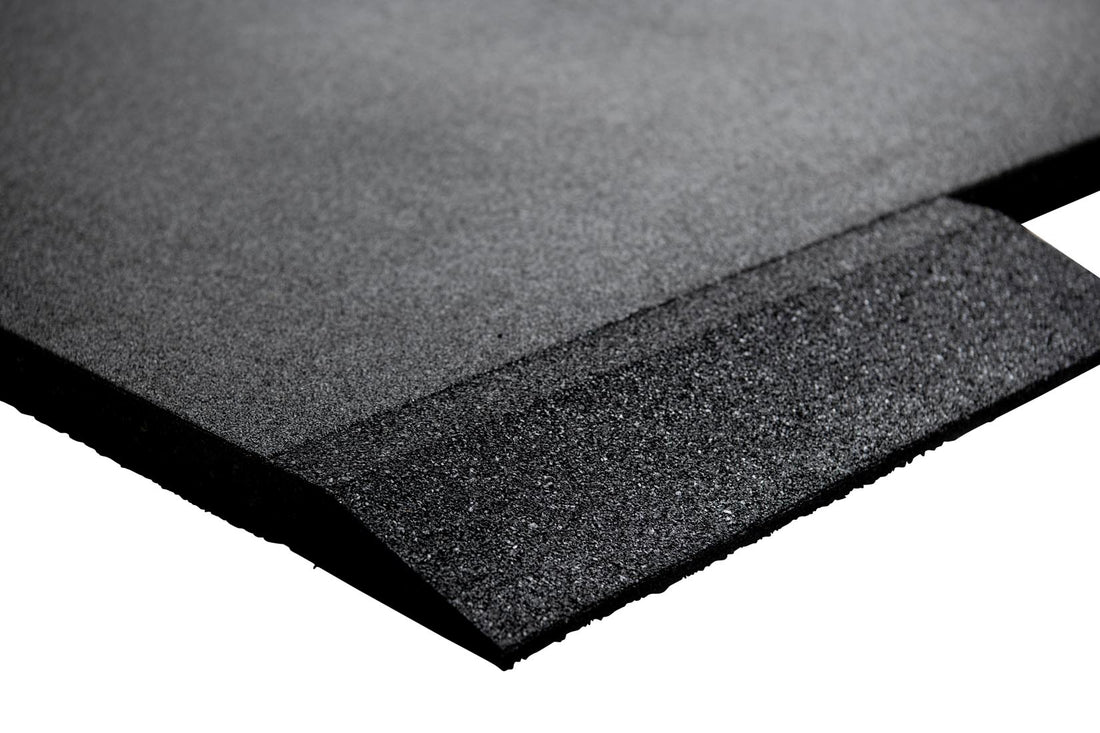
Rubber Gym Flooring Edge Ramps
£9.99
£8.33 ex. VAT
From £9.99
£8.33 ex. VAT
£0.00 ex. VAT

Daily Cleaner for Rubber Gym Flooring
£7.99
£6.66 ex. VAT
From £7.99
£6.66 ex. VAT
£0.00 ex. VAT

Sample - Rubber Gym Flooring
£0.00
£0.00 ex. VAT
£0.00
£0.00 ex. VAT
£0.00 ex. VAT

Rubber Floor Spray Contact Adhesive 500ml
£6.99
£5.83 ex. VAT
£6.99
£5.83 ex. VAT
£0.00 ex. VAT

White Fleck Rubber Gym Flooring Mats (1m x 1m)
£18.99
£15.83 ex. VAT
From £18.99
£15.83 ex. VAT
£32.00
£26.67 ex. VAT

10mm White Fleck Rubber Gym Flooring Mats (1m x 1m)
£18.99
£15.83 ex. VAT
£18.99
£15.83 ex. VAT
£32.00
£26.67 ex. VAT
- Featured
- Most relevant
- Best selling
- Alphabetically, A-Z
- Alphabetically, Z-A
- Price, low to high
- Price, high to low
- Date, old to new
- Date, new to old
What Thickness of Gym Flooring Do You Need?
Choosing the right thickness comes down to how you train and what is underneath. All of our rubber gym flooring tiles are 1m x 1m, available in five thicknesses:
- 10mm — cardio equipment, stretching and bodyweight zones, and light dumbbell work.
- 15mm and 20mm — the sweet spot for most home and garage gyms, handling general free-weight training day in, day out.
- 30mm — heavy free-weight areas where dumbbells and kettlebells get dropped.
- 40mm — dedicated lifting areas and commercial gyms, built to absorb dropped barbells and protect the subfloor beneath.
Not sure which is right? Order a sample and feel the difference before you commit.
Rubber Gym Mats vs Foam Tiles
Foam tiles can seem like a good option: cheap and light, they're easy to install and look good - for a short while. However, they simply cannot stand up against rubber gym tiles in terms of quality and durability.
With each rubber tile made of a dense rubber crumb tightly bonded, the absorption of dropped weights and high footfall far exceeds that of foam tiles. They are also harder wearing, with foam being easy to damage and tear.
Our tiles have straight edges, meaning they can be used against walls, and as edges of floors. However, if you like the added stability the interlocking design of most foam tiles gives, you can purchase our Interlocking connectors which hold neighbouring tiles together, giving that same holding stability.
Home, Garage and Commercial Gym Flooring
Rubber tiles lay directly onto concrete, screed or timber floors with no underlay needed — ideal for garage gyms, spare rooms, sheds and outbuildings. The dense rubber insulates against cold concrete, dampens noise and vibration, and protects both your subfloor and your equipment.
Outfitting a commercial space? The same tiles are trusted by over 1,000 gyms and businesses across the UK. Even larger installations can be handled in-house with our easy-to-install mats.
Affordable Gym Flooring With Bulk Discounts
Quality gym flooring does not need to break the budget. Our tiles are priced per square metre, and bulk discounts are applied automatically as your order grows: 5% off 10+ tiles, 10% off 25+, 15% off 50+, 20% off 100+ and 25% off 200+.
Work out exactly what your space needs — including waste allowance and your bulk saving — with our Gym Flooring Calculator.
Gym Flooring FAQs
What thickness of gym flooring do I need?
For cardio and bodyweight training, 10mm is plenty. Most home and garage gyms are best with 15mm or 20mm, which handle general free-weight training. If you drop heavy dumbbells, choose 30mm — and for dedicated lifting areas or commercial gyms, 40mm gives maximum protection for the subfloor beneath.
How many gym flooring tiles do I need?
Each tile covers exactly 1 square metre, so multiply the length and width of your space in metres and round up. We recommend adding a small waste allowance for offcuts around walls and pillars. Our Gym Flooring Calculator works it all out for you, including any bulk discount.
Can I lay rubber gym flooring on concrete, wood or carpet?
Yes. Rubber tiles can be laid directly onto any firm, level surface such as concrete, screed or timber, with no underlay required. They can sit over short-pile carpet for lighter use, but for free-weight training a solid base is best.
Do gym flooring tiles need to be glued down?
In most home gyms, no — the weight of the rubber keeps the tiles in place once they are laid edge to edge. For high-traffic or commercial spaces, add interlocking connectors or contact adhesive for a permanent fix.
Is rubber gym flooring suitable for a garage gym?
Rubber flooring is ideal for garages: it insulates against cold concrete, protects the slab from dropped weights and creates a safe, non-slip training surface. 15mm or 20mm suits most garage setups, moving up to 30mm or 40mm for heavy lifting.
Can I order a sample before I buy?
Yes — you can order a sample of our rubber gym flooring to check the quality, colour and thickness before ordering your full floor.
How quickly will my gym flooring arrive?
We deliver across the UK, with delivery options and timescales shown at checkout. See our Delivery Information page for full details.
How do I clean and maintain rubber gym flooring?
Sweep or vacuum regularly, then mop with a mild cleaning solution — our daily rubber floor cleaner and microfibre spray mop make it easy. Avoid harsh solvents, which can degrade the rubber surface over time.
Trusted By 1,000+ Gyms & Businesses








Follow Us On Instagram


