Laying Gym Flooring Over Carpet, LVT, Underfloor Heating or Outdoors
Our 1m × 1m rubber tiles are designed to be laid loose on a clean, dry, level, solid floor, indoors. Concrete, screed and garage floors are ideal. This article covers the other surfaces we're asked about. For cleaning and general installation, see Rubber Gym Flooring Care & Maintenance.
Carpet
You can lay the tiles over carpet, but we don't recommend it. Carpet is soft, so the tiles are less stable and can move or rock underfoot, especially heavier tiles under racks or during lifts. The tiles and the equipment on them can also flatten, mark or damage the carpet underneath. If carpet is your only option, use connectors on 20mm or thicker tiles to hold the floor together as one piece, and accept the carpet may not recover afterwards.
Vinyl, LVT, laminate and wood
The tiles can be laid over any firm, flat finished floor. Two things to be aware of:
-
Marking or discolouration. Rubber can react with some vinyl and LVT finishes over time, and heavy equipment can leave pressure marks in soft floors. We haven't tested our tiles against every floor finish, so we can't guarantee there'll be no marking, and we don't recommend a particular barrier product. If you're concerned, leave a sample in place for a few weeks first, or lay a thin breathable underlay of your choosing.
-
Movement. On a smooth finished floor the tiles rely on their own weight and the pressure of neighbouring tiles. A wall-to-wall layout stays put. A partial layout needs edge ramps or adhesive on the open edges.
Underfloor heating
The tiles can be laid over underfloor heating, but rubber is an insulator, so it will reduce the amount of heat reaching the room. We don't hold tested thermal resistance (R-value or tog) figures for the tiles. Please check with your heating designer or installer before ordering, particularly if the system has a maximum floor-covering resistance. We'd suggest 10mm or 15mm where heat output matters.
Garages, sheds and garden rooms
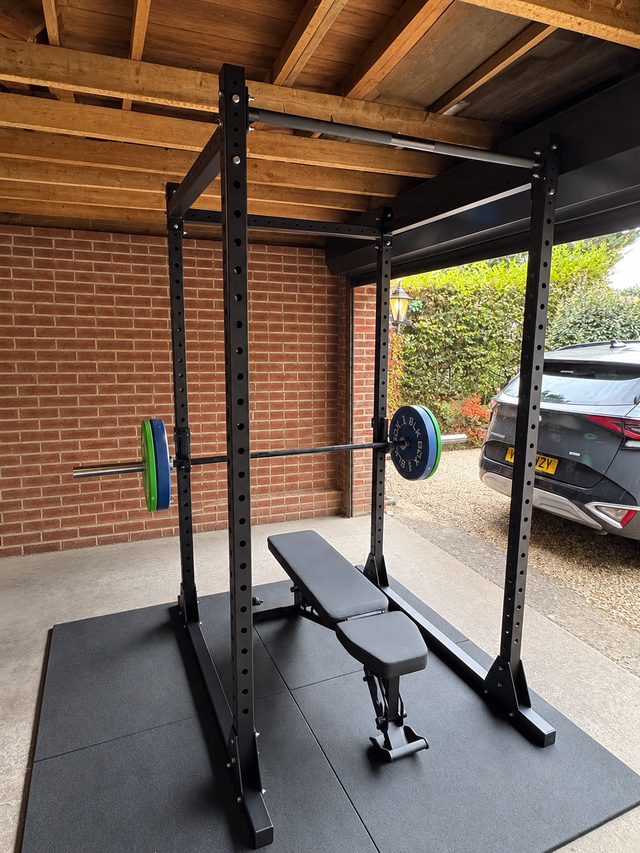
These are what most of our customers use the tiles for. The floor needs to be dry and level. Damp coming up through an uncovered concrete floor can sit under the tiles, so make sure the slab is sealed or has a damp-proof membrane before laying.
Outdoors
We don't recommend outdoor use. The tiles are water-resistant rather than waterproof, and sunlight and standing water shorten their life. Outdoor use isn't covered by the warranty.
Other uses
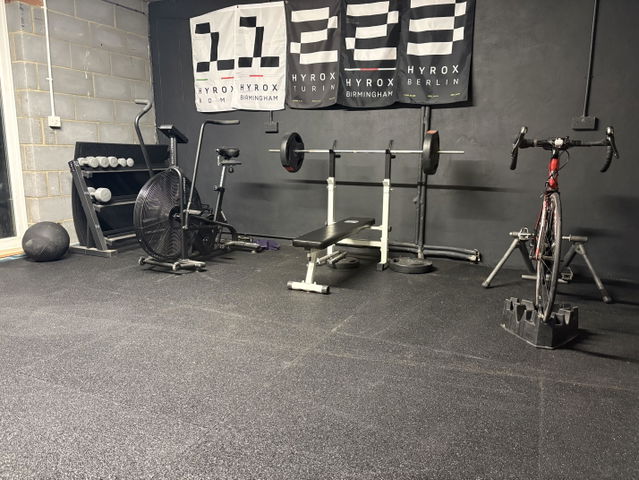
Customers also use the tiles under washing machines, in workshops, play areas and utility rooms. The dense rubber is good at damping vibration. They're made and warranted as indoor gym flooring, so the warranty covers use as a gym floor only, and we can't advise on other uses.
Open edges and partial coverage
If your tiles don't reach wall to wall, the exposed edges need finishing so they don't lift or creep:
-
20mm, 30mm and 40mm: use connectors between tiles, and edge ramps and corner pieces along the open sides. Match the ramp thickness to the tile.
-
15mm: connectors don't fit. Use 15mm edge ramps, fixed with spray adhesive, or run a bead of adhesive along the open edge.
-
10mm: connectors and ramps aren't available. Fix the perimeter with spray contact adhesive.
All of these are in the gym flooring collection. Leave a 5mm to 10mm gap at walls so the floor can expand in warm weather.
Cutting tiles
Tiles are only made as 1m squares. We can't supply custom sizes or cut them for you, but they cut cleanly at home:
-
Mark the line and use a sharp retractable knife against a straight edge.
-
Rest the tile on a length of timber under the cut line so the cut opens up as you work.
-
Make several passes rather than forcing one deep cut. Thicker tiles take more passes.
-
Change the blade often. A fresh blade on each tile makes a real difference.
Lay the floor from the centre outwards in a staggered brick pattern and leave the perimeter cuts until last.